
Know Your Propane Tank: Parts, Gauges, and What the Numbers Mean
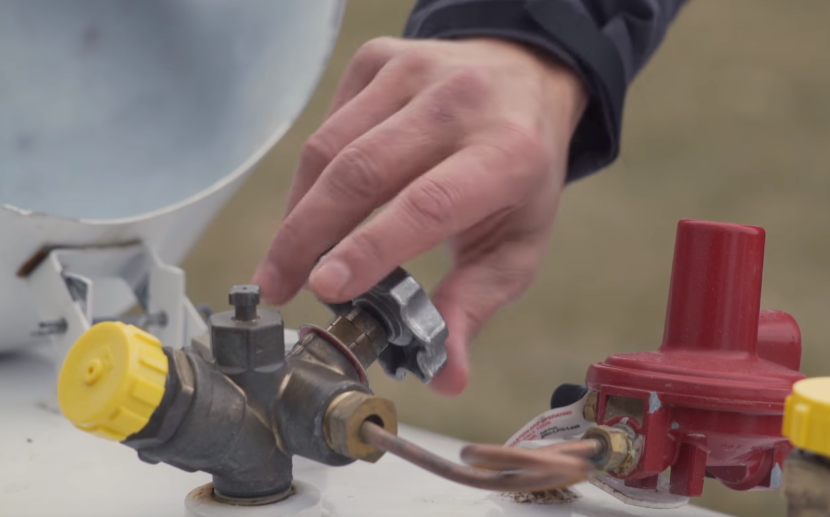
A propane tank does more than hold fuel. Each valve, gauge, and connection plays a role in how propane is stored, delivered, and used safely.
Knowing the basic parts of your tank and how to read the gauge can help you better understand your fuel level, avoid surprises, and feel more confident managing propane at your home.
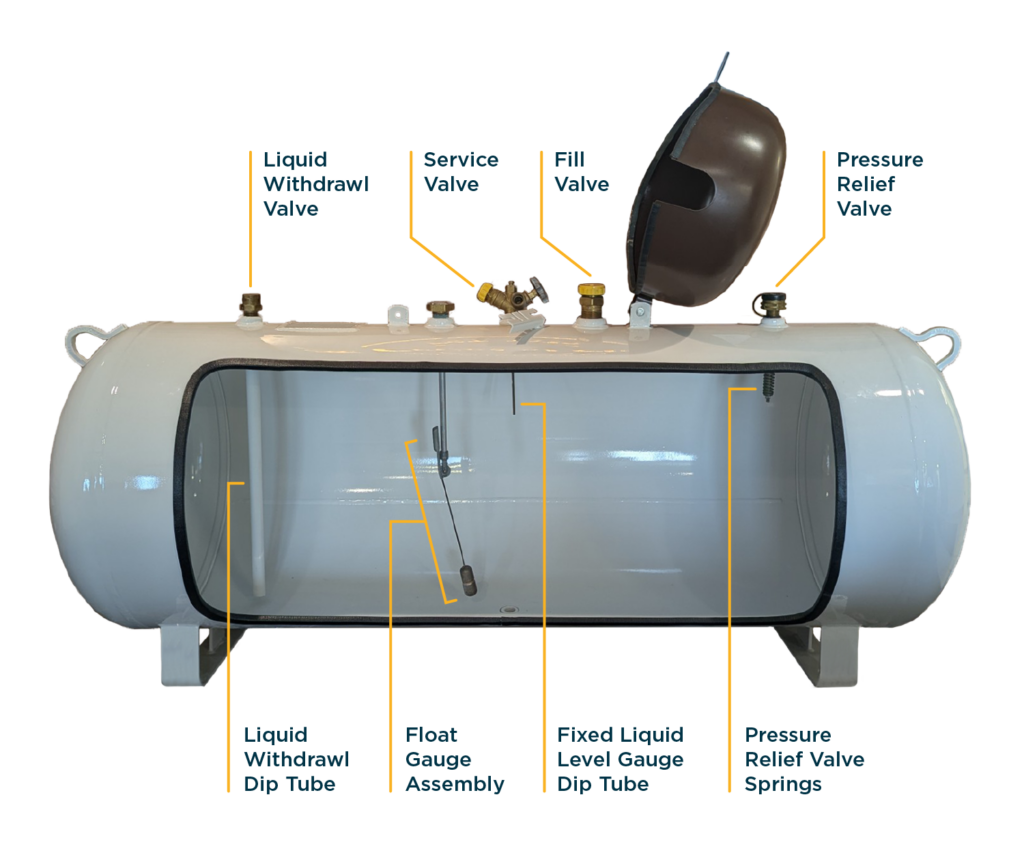
The Main Parts of a Propane Tank
Service Valve
The service valve is the main shutoff valve for the gas line that supplies propane to your home. Turning this valve off stops the flow of propane from the tank to your appliances.
Homeowners should not adjust this valve unless instructed to do so by their propane provider.
Fuel Level Gauge (Percentage Gauge)
The gauge on top of your propane tank shows the percentage of propane in the tank, not the number of gallons. The fuel level gauge uses a float gauge assembly, similar to a fishing bobber, that floats in the liquid petroleum in the tank.
Important things to know:
- Most gauges read from 0% to 90%
- 80% represents a full tank
- The gauge does not change in real time
- Delivery drivers do not fill tanks based on the reading of the fuel level gauge. They reference the fixed liquid level gauge.
Regulator (Not Always Visible)
The regulator controls the pressure of propane leaving the tank before it enters your home. Propane is stored under high pressure, and the regulator reduces that pressure to a level your appliances can safely use.
Pigtail (Not Always Visible)
The pigtail is a short connector hose that links the service valve to the regulator. It allows flexibility between components while maintaining a sealed connection.
Fill Valve
The fill valve is the point where propane is delivered into the tank. This valve is used only by trained delivery drivers during a fill.
Relief Valve
The relief valve protects the tank from excessive internal pressure. If pressure rises beyond safe limits, the valve releases propane vapor to reduce pressure and protect the tank.
Fixed Liquid Level Gauge
The fixed liquid level gauge, often called a “bleeder valve,” acts as a safety indicator during propane tank filling to prevent overfilling. When the propane liquid reaches the capacity level, the valve, which is opened during filling, changes from emitting a white vapor to a liquid spray, signaling to stop filling. This helps confirm the tank is not overfilled.
Vapor Return Valve
The vapor return valve is used during tank evacuation or service procedures. It allows propane vapor to be safely removed when necessary.
How to Read Your Propane Tank Gauge
Most residential propane tank gauges read in percent, not gallons.
Common gauge readings:
- 80% = full/max capacity
- 40% = half full
- 20% = one-quarter full
Because the gauge measures percentage, the number of gallons represented by that percentage depends on the size of your tank.
Converting Gauge Percentage to Gallons
The chart below shows estimated gallons remaining based on common residential tank sizes and gauge readings.
Estimated Gallons by Tank Size
| Gauge Reading | 120-Gallon Tank | 330-Gallon Tank | 500-Gallon Tank |
| 80% | 96 gallons | 264 gallons | 400 gallons |
| 70% | 84 gallons | 131 gallons | 350 gallons |
| 60% | 72 gallons | 198 gallons | 300 gallons |
| 50% | 60 gallons | 165 gallons | 250 gallons |
| 40% | 48 gallons | 132 gallons | 200 gallons |
| 30% | 36 gallons | 99 gallons | 150 gallons |
| 20% | 24 gallons | 66 gallons | 100 gallons |
| 10% | 12 gallons | 33 gallons | 50 gallons |
These numbers are estimates, but they provide a helpful reference for understanding what your gauge reading actually represents.
Why Propane Tanks Stop at 80%
Propane tanks are filled to 80% capacity. That remaining 20% is intentional and required by safety standards.
Propane expands as temperatures rise. The open space inside the tank allows that expansion to occur without creating unsafe pressure levels. An 80% reading means the tank is full.
Why the Gauge Sometimes Moves Slowly
It is normal for the gauge to:
- Stay at the same reading for days
- Drop faster during cold weather
- Move slightly up or down with temperature changes
The gauge measures overall fuel level, not immediate usage. Outdoor temperature, heating demand, and appliance runtime all influence how quickly the reading changes.
Common Propane Tank Myths
“If my tank says 80%, it isn’t really full.”
Not true. Eighty percent is full by design.
“Tanks should be topped off every time.”
Not always. Deliveries are scheduled based on safety, access, and usage patterns.
“All propane tanks work the same.”
Tank size, placement, ownership, and monitoring all affect how a system operates.
Propane Safety Reminders
- Keep the area around your tank clear
- Never adjust valves yourself
- If you smell gas, get outside and call 911/emergency services. After, call Crystal Flash and select the option for emergency support.
- Call if your tank runs empty or appliances stop working
If you are new to propane or planning an install, our Propane Tank Installation Guideline explains placement rules, inspections, and what to expect.
Propane Glossary: Common Terms Explained
New to propane? These are some of the most common terms you’ll see when managing your tank and service.
Gauge
The dial on your propane tank that shows how full it is as a percentage. It does not measure gallons.
80% Fill Rule
A safety standard that limits propane tanks to 80% of their total capacity to allow room for expansion as temperatures change.
Vapor Space
The empty space at the top of a propane tank that allows propane to expand safely. This is why tanks are never filled to 100%.
Will Call Delivery
A delivery option where you monitor your tank level and contact your propane provider to request a refill.
Automatic Delivery (Auto-Fill)
A delivery option where your propane provider schedules refills for you based on usage patterns, weather, and delivery planning.
Tank Monitoring
A wireless system installed on the tank that tracks propane levels and sends updates to both you and your propane provider.
Runout
When a propane tank runs completely empty. A runout interrupts service and may require a safety check before refilling. It requires a mandatory, professional leak check to safely restore service.
Still Have Questions About Your Propane Tank?
Understanding your tank makes propane easier and less stressful to manage. If you have questions about your gauge, refill timing, or delivery options, Crystal Flash’s team is ready to help.

Refer a Friend
Know someone in need of affordable propane and reliable delivery? Send them our way, and when they sign up with Crystal Flash, you'll get a reward!
Get Started Today
Propane delivery to your home from Michigan's go-to provider.
Our new customer bundle combines our no-hassle Auto-Fill Delivery program with a FREE Crystal Flash Tank Monitoring System.
Related Articles
How Michigan Farms Use Propane and Diesel Throughout the Year
Learn how Michigan farmers use diesel and propane throughout the year to support their operations and keep agriculture running in the Wolverine State.
How Much Does It Cost to Refill a Propane Tank?
Learn what affects propane tank refill cost, how much propane costs per gallon, and what Michigan homeowners can expect when refilling a home propane tank.
Heating a Rural Home Without Natural Gas
Learn about alternatives to natural gas heating for rural homes, including propane, fuel oil, electric heat, and off-grid-friendly options.
Subscribe To Our Newsletter
We’ll send you occasional updates about our business and industry. You’ll hear from us about once a month.