
How Michigan Farms Use Propane and Diesel Throughout the Year
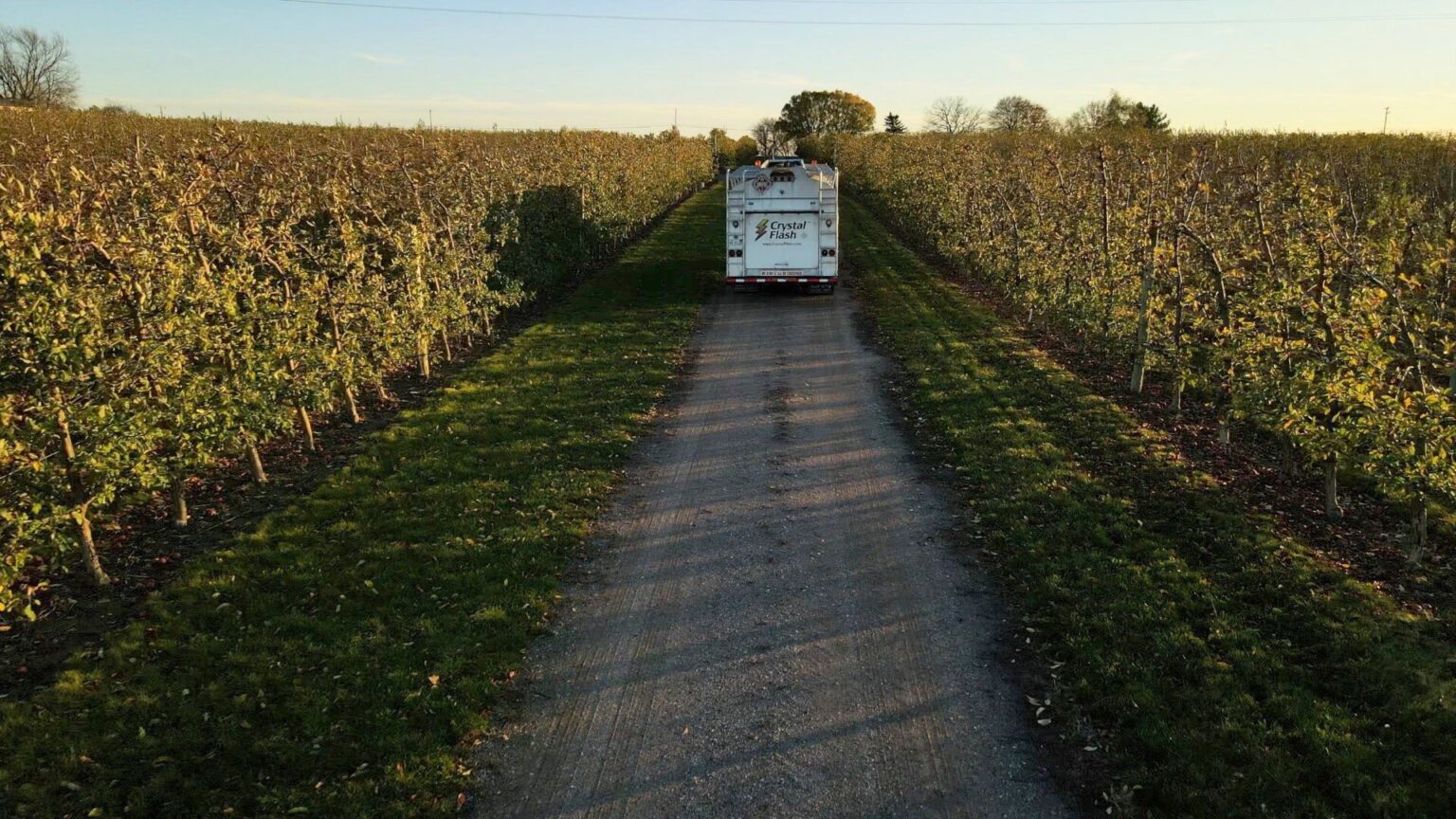
If you run a farm in Michigan, you already know that fuel keeps everything moving from the first frost-fighting night of spring to the last grain-drying push of fall. But the fuels doing that work, and what they’re powering, change a lot depending on the season. Propane and diesel play different roles at different times of year, and understanding how they work together can help you plan smarter and avoid costly surprises.
Here’s a look at how Michigan farms put propane and diesel to work, season by season.
Seasonal Fuel Use at a Glance
| Season | Propane Uses | Diesel Uses |
| Spring | Frost protection, greenhouse heating, flame weeding | Tractors, planters, field cultivators, irrigation pumps |
| Summer | Greenhouse operations, forklift fueling, standby generators | Cultivating, spraying, irrigation pumps, farm trucks |
| Fall | Grain drying (corn, soybeans, wheat), forklift fueling | Combines, grain carts, semi trucks, harvest equipment |
| Winter | Livestock barn heating, water heating, backup generators, milking parlors | Hauling, transport, year-round equipment maintenance |
Spring: Fuel for the Busy Planting Season
Spring demands diesel in the fields and propane in the greenhouse. For fruit growers in particular, one cold night without frost protection can erase an entire season.
Diesel
As soon as the ground thaws in Michigan, farm equipment comes out of storage and diesel consumption picks up in a hurry. Diesel engines power roughly 75% of all farm equipment in the U.S., and on a Michigan farm, that number feels just as true. Common spring diesel uses include:
- Tractors for tillage, fertilizer application, and field prep
- Planters and seeders covering hundreds of acres in tight weather windows
- Field cultivators and spray rigs
- Irrigation pumps during dry spells
Propane
Propane earns its keep in spring too, especially for fruit and vegetable growers. Michigan leads the nation in asparagus production and ranks among the top states for cherries, blueberries, and cucumbers. A late frost can wipe out an entire season’s worth of work overnight. Propane-powered frost protection equipment is a lifeline for many Michigan orchards and specialty crop operations; it circulates warm air among trees and plants when temperatures drop to dangerous levels.
Greenhouses also stay busy in spring. When you’re starting seedlings or extending your growing season, propane produces clean, consistent heat that won’t leave residue or contaminate crops.
Finally, spring is a popular time for propane flame weeding. Rather than applying herbicides between crop rows, farmers use propane-powered torch units to rupture plant cells and kill weeds without chemicals. Fields can be re-entered immediately, and there’s no risk of herbicide resistance, which is a growing concern for Michigan grain and vegetable farmers alike.
Summer: Full Throttle on Diesel, Steady Demand for Propane
Summer is peak diesel season on most Michigan farms, with propane handling the supporting roles that keep the rest of the operation running smoothly.
Diesel
Cultivating, spraying, hauling inputs, and managing a hundred other tasks keep diesel-powered equipment running from sunup to sundown. Summer diesel uses span the full operation:
- Cultivators and spray rigs working through row crops
- Irrigation pumps during dry stretches (Michigan farms see drought stress more often than people expect)
- On-road farm trucks running to grain elevators, supply co-ops, and markets (on-road diesel)
- Off-road equipment like tractors, which use tax-exempt dyed diesel
Managing both types of diesel and keeping tanks full during the busiest weeks of the year catches farms off guard when they don’t have a reliable delivery partner.
Propane
Propane stays active in summer for greenhouse operations, forklift work at larger facilities, and standby generators. Propane forklifts are popular on Michigan farms because they perform well indoors and outdoors, handle wet conditions without issue, and don’t lose power as the day goes on the way electric forklifts can.
Fall: Propane Takes Center Stage at Harvest
If there’s one time of year when propane demand on Michigan farms spikes sharply, it’s fall, and grain drying is the reason why.
Propane
Corn, wheat, and soybeans need to be dried down to safe moisture levels before they can be stored or sold. Michigan’s weather doesn’t always cooperate; wet fall harvests are common. An estimated 8,000 Michigan farms rely on propane during harvest season, primarily for:
- Grain dryers running corn, soybeans, and wheat down to storage-safe moisture levels
- Continuous dryer operation, sometimes around the clock during peak harvest weeks
- Forklift fueling at grain handling facilities
New high-efficiency propane grain dryers can remove the same amount of moisture from grain while using significantly less thermal energy than older models, which helps keep operating costs manageable even when propane prices fluctuate.
Diesel
Diesel demand stays high in the fall, too. Combines, grain carts, and semi trucks all depend on it during the harvest push. Timing is especially urgent here; running out of diesel during a narrow harvest window can cost your yield as well as money.
This is one of the most stressful times of year to manage fuel, which is why automatic delivery and remote tank monitoring make a real difference for Michigan ag operations. When you’re running grain dryers around the clock, the last thing you want to think about is whether your tank is getting low.
Winter: Keeping Animals Warm and Equipment Ready
Winter is propane’s steadiest season on the farm: livestock operations run it continuously, and a reliable supply is non-negotiable when temperatures drop below zero.
Propane
Michigan winters are no joke, and for livestock operations, that means propane works overtime. Keeping animals healthy and productive through the cold months depends on consistent heat across multiple buildings and systems:
- Barn and livestock building heating (including farrowing houses and poultry buildings)
- Milking parlor heating and hot water for equipment sanitation
- Greenhouse heating for year-round growers
- Standby and backup generators (propane doesn’t degrade over time, so a generator that sits unused for months is still ready when a winter storm takes out the grid)
Diesel
Diesel keeps the trucks moving in winter, handling any hauling or deliveries that don’t slow down just because it’s cold. Winter is also a smart time to review your annual fuel consumption and plan ahead for the coming planting season.
Why a Reliable Fuel Partner Matters for Michigan Farms
Running out of propane during grain drying or diesel during planting is inconvenient and expensive. Between the downtime, the scramble to find fuel, and the potential crop damage, gaps in your fuel supply can cost more than a full year of delivery fees.
Crystal Flash has been serving Michigan agricultural operations since 1932. As a 100% employee-owned company based right here in Michigan, we understand the seasonal demands that farm operations face because we’ve been supplying fuel through Michigan’s harvests, winters, and planting seasons for nearly a century. Our Auto-Fill delivery program, wireless tank monitoring, and on-site fuel delivery keep your operation running without making fuel management another thing on your plate.
We also supply bulk lubricants and Diesel Exhaust Fluid (DEF) so you can source more of what your equipment needs from one dependable partner. No offshore call centers, no runaround. You’ll enjoy working with a local team that shows up when you need them.
Ready to talk about fuel delivery for your farm? Get started with Crystal Flash today. We’re happy to walk through delivery options, tank monitoring, and pricing that fits your operation.
Frequently Asked Questions
What is propane used for on a farm?
Propane powers grain drying, livestock building heat, greenhouse heating, frost protection for orchards, flame weeding, water heating, forklift operation, and standby generators. In Michigan, grain drying is one of the biggest single uses; an estimated 8,000 farms depend on propane during the fall harvest season.
Do Michigan farms use a lot of propane?
Yes. About 8,000 farms across Michigan rely on propane, with the biggest demand spike coming in the fall during grain drying season. Wet harvests drive especially high propane consumption as farmers work to dry corn and soybeans down to safe storage moisture levels.
What is diesel used for on a farm?
Diesel powers the majority of heavy farm equipment, including tractors, combines, planters, cultivators, and farm trucks. It also fuels irrigation pumps and backup generators. Diesel engines power roughly 75% of all farm equipment in the U.S., making diesel the backbone fuel for field operations from planting through harvest.
What’s the difference between on-road and off-road diesel for farms?
On-road diesel (clear diesel) is used in vehicles that travel on public roads, like farm trucks. Off-road diesel (dyed red diesel) is tax-exempt and used in equipment that stays off public roads, like tractors and combines. Crystal Flash delivers both types to agricultural customers across Michigan.
Can I get both propane and diesel delivered to my farm?
Yes. Crystal Flash delivers propane and diesel to agricultural customers across Michigan’s lower peninsula, along with bulk lubricants and Diesel Exhaust Fluid (DEF). One supplier for multiple fuel types means fewer vendors to manage and one number to call when you need a delivery.
How do I make sure I don’t run out of propane during grain drying season?
Automatic delivery combined with wireless tank monitoring is the most reliable option. Crystal Flash’s Auto-Fill program tracks your usage and schedules deliveries before you run low so you’re not calling around for emergency fuel in the middle of a harvest push.

Refer a Friend
Know someone in need of affordable propane and reliable delivery? Send them our way, and when they sign up with Crystal Flash, you'll get a reward!
Get Started Today
Propane delivery to your home from Michigan's go-to provider.
Our new customer bundle combines our no-hassle Auto-Fill Delivery program with a FREE Crystal Flash Tank Monitoring System.
Related Articles
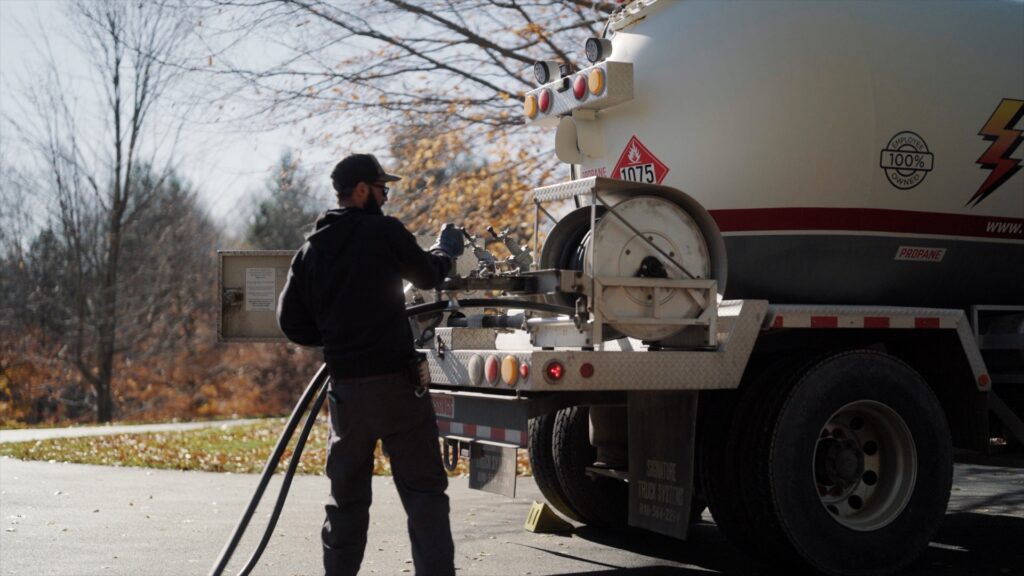
How Much Does It Cost to Refill a Propane Tank?
Learn what affects propane tank refill cost, how much propane costs per gallon, and what Michigan homeowners can expect when refilling a home propane tank.
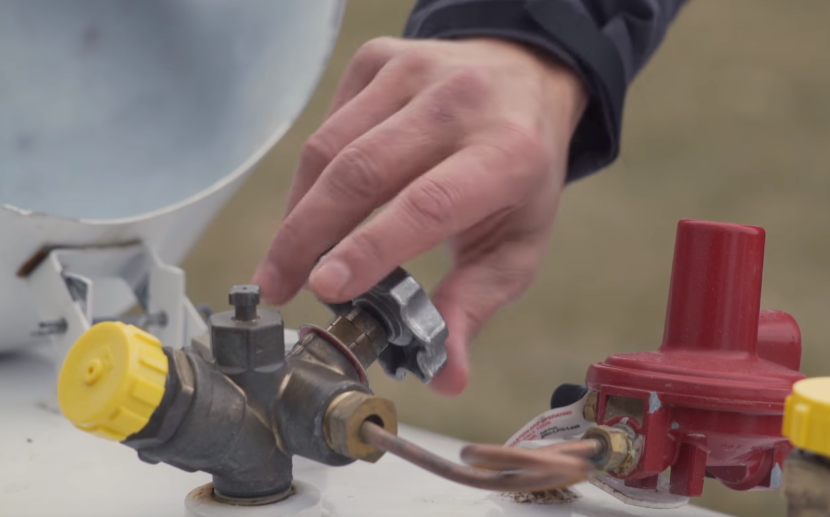
Know Your Propane Tank: Parts, Gauges, and What the Numbers Mean
Learn the parts of a propane tank, how to read the gauge, and what percentage readings mean in gallons, with a simple reference chart for homeowners.
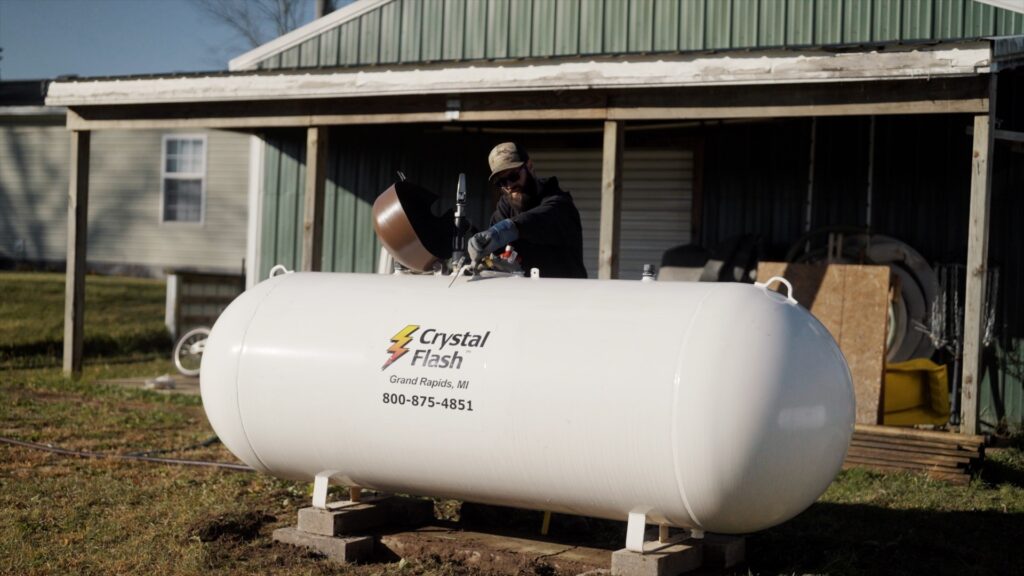
Heating a Rural Home Without Natural Gas
Learn about alternatives to natural gas heating for rural homes, including propane, fuel oil, electric heat, and off-grid-friendly options.
Subscribe To Our Newsletter
We’ll send you occasional updates about our business and industry. You’ll hear from us about once a month.