
Propane Delivery in Michigan: How to Never Run Out (and Spend Less Doing It)
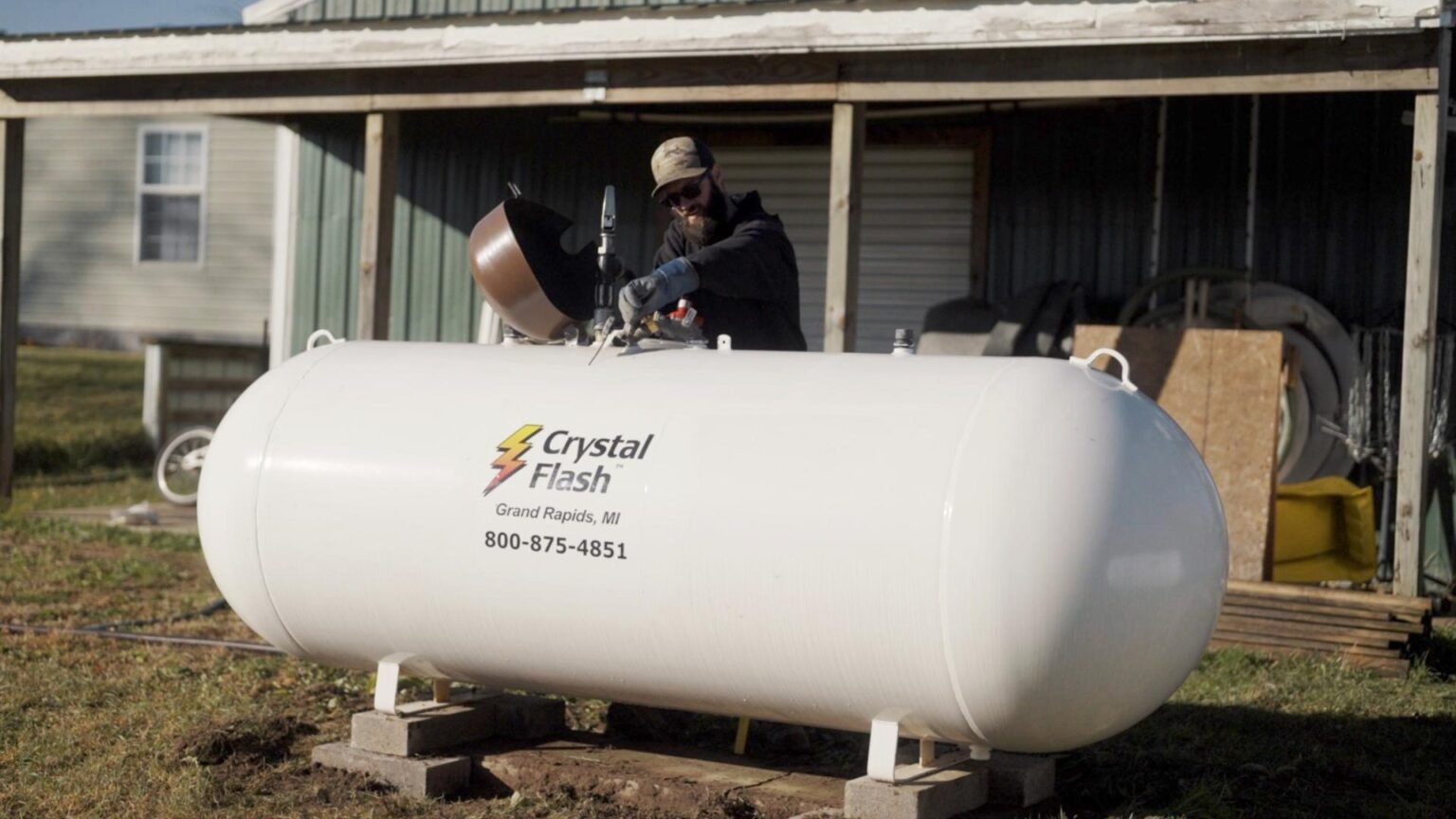
Michigan winters don’t negotiate. When temperatures drop below zero and the wind is cutting across open farmland, the last thing you want to discover is a propane tank running on fumes.
For rural Michigan families — where natural gas lines often don’t reach — propane powers everything: the furnace, the water heater, the stove, the fireplace, sometimes the generator. When the supply runs out, it’s not a minor inconvenience, it’s a serious safety hazard. Heat shuts off. Hot water stops. And before service can resume, a certified safety inspection is required by your propane provider. That means hours in the cold, not minutes.
The good news is that with the right setup, running out of propane is entirely preventable, and managing your supply doesn’t have to take much thought at all.
First: How Much Propane Does Your Home Actually Use?
Before anything else, it helps to know what you’re working with.
Most Michigan homes run on a 500-gallon propane tank. Because tanks are filled to a maximum of 80% capacity for safety reasons, your effective usable supply tops out at around 400 gallons when full.
Not sure what size tank you have? Use our tank sizing guide →
Here’s a real-world example of what that means: a family in a 2,500 square foot home near Traverse City, using propane as their primary heat source, might burn through 500 to 600 gallons between October and March — and that’s in a relatively average winter. In a brutal one, usage climbs higher.
That kind of demand means you’re potentially running through your entire tank and more in a single season. Understanding your usage is the foundation of smart propane management. It determines how often you need deliveries, which pricing structure makes sense for your budget, and how much real cushion you have when January turns vicious.
Learn more about residential propane delivery in Michigan →
Stop Watching the Gauge
Most homeowners manage propane the same way they always have: watch the gauge, call when it looks low, hope the truck comes before the tank hits empty.
This approach — called Will Call delivery — puts the entire burden on you. And it works fine, right up until it doesn’t. A busy week, a distracted weekend, a gauge that’s harder to read in the dark at 6 a.m., and suddenly you’ve got a problem. What’s worse, completely running out of propane triggers a required safety inspection before service can resume, which turns what should be a routine fill into a much bigger ordeal.
Auto-Fill removes that burden entirely. Instead of waiting for your call, Crystal Flash proactively schedules your deliveries, using a combination of your usage history, current weather patterns, and tank data. A delivery shows up before you need it. You don’t have to monitor, remember, or guess.
For families who’ve dealt with a run-out even once, the switch to Auto-Fill tends to be permanent.
Add Wireless Tank Monitoring: Know Your Level Any Time
If you want complete visibility on top of automatic delivery, wireless tank monitoring closes the loop.
Crystal Flash installs a small cellular device directly on your tank. It continuously measures your fuel level and sends that data to a secure customer portal you can access from your phone, tablet, or computer, any time, day or night.
Through the portal or app, you can:
- Check your current tank level at a glance
- Review your full delivery history
- Pay your bill
- Request service
When wireless monitoring is paired with Auto-Fill, propane management essentially becomes invisible. Customers consistently describe it as one of the best decisions they’ve made as homeowners, not because it’s exciting, but because it’s one less thing to worry about from November through March.
Lock In Your Price Before Winter Starts
Once your delivery situation is handled, the next question is cost, and this is where a lot of homeowners leave money on the table.
Propane prices fluctuate significantly during the winter months. A price spike in January or February isn’t unusual, and it tends to arrive at exactly the moment when demand is highest and options feel limited.
Crystal Flash’s Price Protection Program lets you lock in your rate before the heating season begins. You know what you’re paying. A polar vortex doesn’t change the cost. It’s why more than 93% of Crystal Flash customers choose this option year after year.
For families who want monthly costs to stay completely steady, the Budget Payment Plan goes a step further. Rather than absorbing the full weight of your propane spending between November and March when you’ll likely take deliveries, payments are spread evenly across eleven months. The total cost is the same, but it arrives in manageable, predictable installments instead of seasonal spikes.
Compare pricing plans and get a quote →
“I use the Pre-buy option and Auto-Fill plan. I appreciate the tank monitor that the company uses and the fact that I can connect to the monitor with an app on my phone. It is reassuring to know the company checks the monitor and makes sure I always have gas”
— Susan G., Big Rapids, MI
The Hidden Costs of “Cheap” Propane
The lowest price per gallon doesn’t always mean the lowest total cost. It’s one of the most common misconceptions in the propane industry, and some providers count on it.
Before signing with any propane company, ask these questions:
- Is there a tank-set fee?
- Is there an annual tank lease fee?
- Are there termination fees if you want to leave?
- Is there a multi-year contract requirement?
These charges can quietly add hundreds of dollars to your annual costs — costs that never show up in the advertised per-gallon rate.
Crystal Flash charges none of them. No tank-set fees. No lease fees for active customers*. No termination fees. No multi-year contracts. The price you’re quoted is the price you pay.
See exactly how Crystal Flash handles fees →
Ready to Make the Switch? Here’s What Propane Management Should Look Like.
If you’ve been frustrated with your current provider — unexpected fees, missed deliveries, impersonal service from a national call center — switching is simpler than most homeowners expect.
If your current tank is company-owned, the process typically involves a tank swap, a safety inspection, and a first fill. Crystal Flash coordinates the whole transition. You don’t have to manage the logistics.
The setup that works:
- Auto-Fill handles deliveries automatically, based on your actual usage and weather
- Wireless tank monitoring gives you real-time visibility from anywhere
- Price Protection saves you from mid-winter market price spikes
- Budget Payment Plan keeps your monthly costs level and predictable
When these pieces are in place, propane stops being something you manage and becomes something you simply have.
New to Propane? Installation Is Handled for You
If your home has never had propane service, the setup process can feel overwhelming with permits, safety clearances, equipment placement, and appliance checks.
Crystal Flash handles all of it. Tank placement follows strict safety code requirements, installation is fully compliant, and a complete appliance review is included before you ever take delivery. You don’t need to navigate the regulations or coordinate with multiple contractors.
About Crystal Flash
Crystal Flash has served Michigan homeowners and businesses since 1932. The company is 100% employee-owned, which means the people answering your calls and driving your deliveries have a genuine stake in getting things right. Our teammates live in the same communities they serve, not a different state or an entire ocean away.
Propane is a commodity. Service is not. That distinction is what Crystal Flash has been built on for over 90 years.
Frequently Asked Questions
How long will a full 500-gallon propane tank last in a Michigan winter?
It depends on your home’s size, insulation, and how many appliances run on propane. As a general benchmark, a 2,500 square foot home using propane as its primary heat source might use 500–600 gallons in an average heating season. A well-insulated home or milder winter will stretch that further; a drafty house or brutal February will shorten it.
What happens if my propane runs out completely?
When a tank runs completely empty, air and moisture can enter the lines, and appliance pilot lights will go out. Before propane service can resume, a certified technician must perform a pressure test and safety inspection, a costly process that can take several hours. This is why run-outs are so disruptive, and why Auto-Fill is worth considering right from the start of service.
Can I switch propane companies if I don’t own my tank?
Yes! If your current tank is owned by your provider, Crystal Flash will coordinate the tank swap depending on the level of propane in your former provider’s tank and when you’d like to switch. We’ll also coordinate the safety inspection and first fill. The transition is typically straightforward.
What’s the difference between Will Call and Auto-Fill delivery?
With Will Call, you monitor your tank and call for delivery when it gets low. With Auto-Fill, Crystal Flash tracks your usage and weather conditions and proactively schedules deliveries before you run low. Most customers who switch to Auto-Fill don’t go back.
*Does Crystal Flash charge tank rental fees?
No. Some companies charge a tank rental fee regardless of usage. In very specific and limited instances, we will pass along a tank lease fee to a customer that has an underutilized tank sitting on their property, but Crystal Flash will never charge “rent” just to use our tank.
What areas of Michigan does Crystal Flash serve?
Crystal Flash serves a wide range of Michigan communities, primarily across the Lower Peninsula. Check service availability in your area.

Refer a Friend
Know someone in need of affordable propane and reliable delivery? Send them our way, and when they sign up with Crystal Flash, you'll get a reward!
Get Started Today
Propane delivery to your home from Michigan's go-to provider.
Our new customer bundle combines our no-hassle Auto-Fill Delivery program with a FREE Crystal Flash Tank Monitoring System.
Related Articles
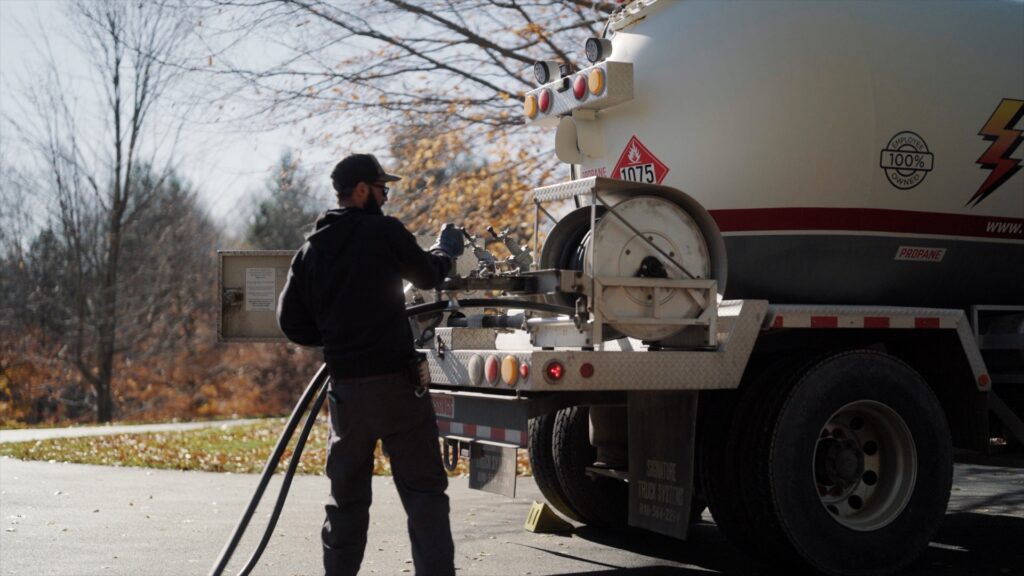
How Much Does It Cost to Refill a Propane Tank?
Learn what affects propane tank refill cost, how much propane costs per gallon, and what Michigan homeowners can expect when refilling a home propane tank.
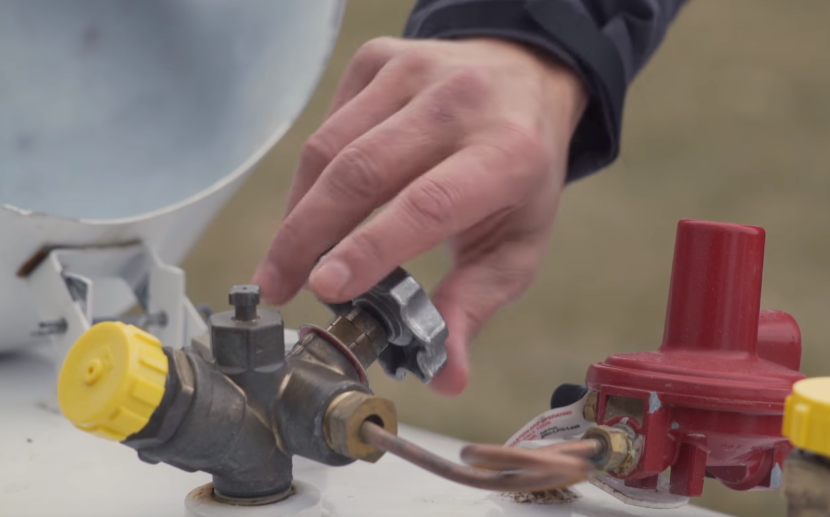
Know Your Propane Tank: Parts, Gauges, and What the Numbers Mean
Learn the parts of a propane tank, how to read the gauge, and what percentage readings mean in gallons, with a simple reference chart for homeowners.
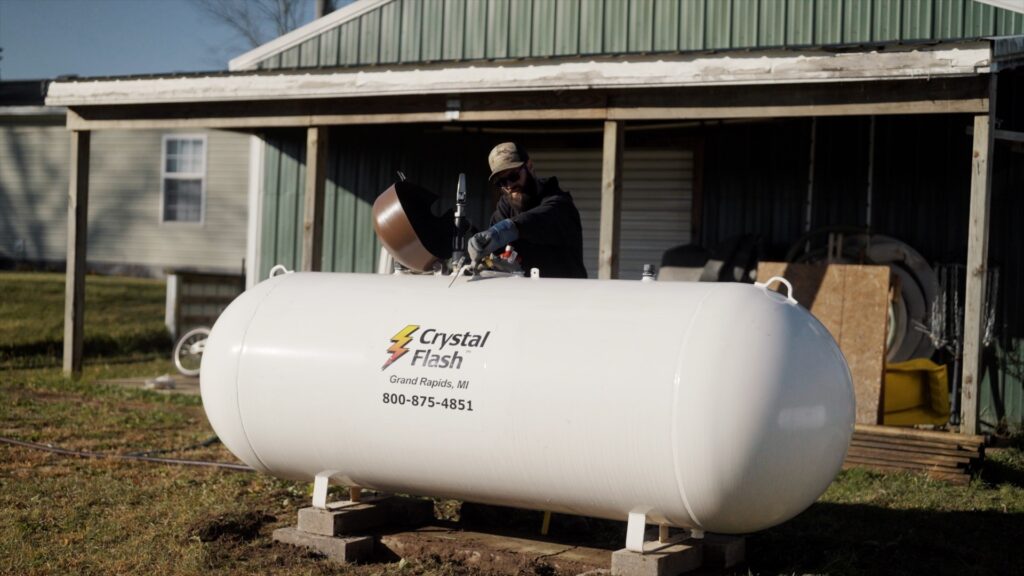
Heating a Rural Home Without Natural Gas
Learn about alternatives to natural gas heating for rural homes, including propane, fuel oil, electric heat, and off-grid-friendly options.
Subscribe To Our Newsletter
We’ll send you occasional updates about our business and industry. You’ll hear from us about once a month.